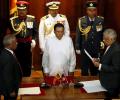
The swearing in ceremony was held inside the premises of the Presidential Secretariat at 9:30 am. President Sirisena administered the oath of office to 66-year-old Wickremesinghe, who has already served three times as the prime minister.

The 73-year-old United National Party was appointed as the prime minister by President Gotabaya Rajapaksa after they held closed-door discussions on Wednesday.

Political analysts said Sirisena's move to install Rajapaksa as the prime minister could lead to a constitutional crisis as the 19th amendment to the Constitution would not allow the sacking of Wickremesinghe as the premier without a majority.
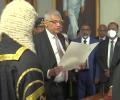
Wickremesinghe is the first Sri Lankan president to be elected by Parliament following a vote.

The 225-member Parliament will elect the new president by a secret vote on July 20, Speaker Mahinda Yapa Abeywardena said on Friday.

Ranil Wickremesinghe was on Wednesday elected as Sri Lanka's new President by Parliament, in a rare move that could provide continuity for ongoing discussions with the International Monetary Fund for a bailout for the cash-strapped nation but a development likely to anger anti-government protesters who have been demanding his resignation from office for weeks.
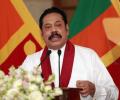
Rajapaksa's move signalled that he would contest the snap polls, to be held on January 5, under his own party banner and not that of Sirisena's SLFP.

Parliament met for a brief special session on Saturday to announce the vacancy in the presidency following the resignation of Rajapaksa.

India welcomed resolution of the political crisis in Sri Lanka and exuded confidence that relations between the two countries will continue to move on in an upward trajectory.
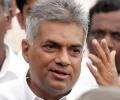
Incumbent Ranil Wickremesinghe is set to take oath as Sri Lanka's new prime minister of a unity government on Tuesday after his United National Party appeared close to a simple majority, with rival Mahinda Rajapaksa admitting defeat in the closely contested parliamentary polls.
India said it will continue to extend its developmental assistance to the friendly people of Sri Lanka.

'If Ranil Wickremesinghe starts repressing and suppressing the protesters who represent the people, that will pose a danger for him to continue in office.'

The all-party meeting aimed at reconciliation and conferring full powers to Sri Lanka's provincial councils will be reconvened in a month after initial deliberations on Wednesday failed to yield any agreements, party officials said on Thursday.

Sri Lankan President Maithripala Sirisena on Friday dissolved the parliament, paving the way for fresh parliamentary elections in mid August, eight months ahead of the schedule.

Ranjith Madduma Bandara, a senior politician from Wickremesinghe's United National Party was sworn in on Thursday morning as the new minister in charge of the police.

President Maithripala Sirisena's new Cabinet was also sworn in and Rajapaksa was named the new minister of finance and economic affairs.

Reacting to the apex court's ruling, sacked Prime Minister Wickremesinghe said, "We trust that the President will promptly respect the judgment of the courts.

Sri Lanka is going through the worst economic crisis since independence in 1948. A crippling shortage of foreign reserves has led to long queues for fuel, cooking gas and other essentials while power cuts and soaring food prices heaped misery on the people.

Sri Lanka's main Opposition party Samagi Jana Balawegaya (SJB) on Tuesday handed over to the parliamentary Speaker motions of no-confidence against the Sri Lanka Podujana Peramuna (SLPP) coalition government and embattled President Gotabaya Rajapaksa, even as the government announced the appointment of a cabinet sub-committee to look into the proposal for a new Constitution.

During the 13-minute special session, Dhammika Dassanayake, ecretary general of Parliament, announced the vacancy for the post of president.

Sri Lanka's Acting President Ranil Wickremesinghe on Monday imposed emergency giving him sweeping powers ahead of the key election on July 20 to pick a new President as he urged the political parties to put aside differences and form an all-party government, with the Opposition dubbing his decision as an 'undemocratic draconian act'.
The parliament has approved a no-trust vote against Prime Minister Rajapaksa, speaker of parliament Karu Jayasuriya announced in the House.

The two brothers led a decisive campaign that helped end the island nation's three decade long civil war against the Liberation Tigers of Tamil Eelam.

Sri Lanka President Maithripala Sirisena sacked Prime Minister Ranil Wickremesinghe and appointed former strongman Mahinda Rajapaksa as the new premier. Sirisena's move has triggered a constitutional crisis in the country. Here are some points about the unfolding crisis and the role of key players:

Prime Minister Narendra Modi on Friday conveyed to Sri Lankan President Ranil Wickremesinghe India's expectations from Colombo to fulfill the aspirations of the Tamil community in the island nation and ensure a life of respect and dignity for it.
Sirisena's sacking of Wickremesinghe was the culmination of an year of bitter relations between them on several policy matters. The president has been critical of the prime minister and his policies, especially on economy and security.

The president has agreed to call a parliamentary session on November 5, officials at Rajapaksa's office said.

For India to view the new Sri Lankan leadership only through the prism of the past or through their narrow view on China, is fraught with possibilities that should be avoided, asserts N Sathiya Moorthy.
Lanka is witnessing a political crisis since October 26 when President Sirisena sacked Wickeremesinghe and replaced him with Rajapaksa.

'India has given assistance that we required, otherwise we would not have been able to survive this far.'

Sirisena dissolved Parliament hours after a close aide of the President said that there will be no snap elections or a national referendum to end the current crises.

Sri Lanka's former premier Ranil Wickremesinghe has rubbished the government's claim that the Liberation Tigers of the Tamil Eelam rebels are on the verge of being brought down to its knees saying there are still 15,000 armed Tamil tigers left.

Sri Lanka's former president Mahinda Rajapaksa on Tuesday accepted defeat in the parliamentary elections even before the announcement of the final results.

Rajapaksa fled the country and resigned last month in the face of a popular uprising against his government for mismanaging the island nation's economy.

The recent 'revelation' by TN fishers freed by Sri Lanka after they had paid up Lankan rupees 50,000 each in fines, that their hair was tonsured in prison and they were forced to remove their garments other than the underpants, and were also made to clean toilets, as if with vengeance, has touched a raw nerve this time, just as another issue or issues had done it ahead of the Jallikattu protests, observes N Sathiya Moorthy.

Rajapaksa informed the lawmakers of United People's Freedom Alliance that he has resigned from the post.
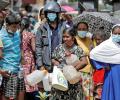
New Delhi has a chance to rid itself of its image as the bully in the subcontinent by helping a neighbour tackle problems that India, for once, has no role in creating. It should grab the opportunity with both hands, suggests Aditi Phadnis.

There is a view that heavyweight portfolios like home, finance, defence and external affairs besides education and culture, two ministries with strong ideological hues, will be kept by the BJP, while its allies can get anywhere between five to eight cabinet berths.

Speaker Karu Jayasuriya questioned the president's decision to suspend parliament till November 16, saying it will have "serious and undesirable" consequences on the country.

At least 10 persons were admitted to the National Hospital after the confrontation between protesters who have currently been staying inside the prime minister's official residence, the Colombo Post news portal reported.
